The biggest leak in most beginner and intermediate players is playing too many hands before the flop. It feels boring to fold, so they talk themselves into playing marginal cards. The result is a slow, invisible bleed of chips that only shows up over hundreds of sessions.
Choosing which hands to play and which to throw away is the single most impactful decision you make at a poker table. Get this right, and everything else becomes easier. Get it wrong, and no amount of post-flop skill can save you.
Why Hand Selection Matters
Every time you enter a pot, you invest chips. If you enter with a hand that is statistically weaker than what your opponents are likely holding, you are starting the hand at a disadvantage. Over thousands of hands, that disadvantage costs real money.
Strong hand selection means you enter pots with an edge. You hold better cards on average, which means you flop better pairs, better draws, and better made hands. This is the core of what players call a tight-aggressive style.
The Three Categories of Starting Hands
Not all starting hands are created equal. We can break them into three broad groups based on how they perform across different board textures and situations.
Premium Hands
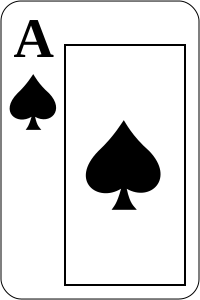
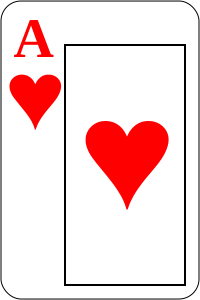
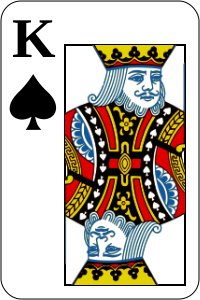
These are the hands you are always happy to play, regardless of position. They dominate most other holdings and can win big pots on their own.
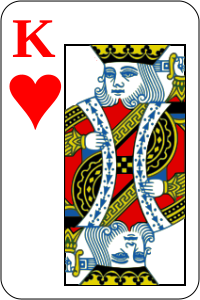
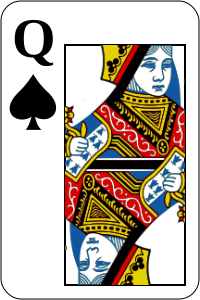
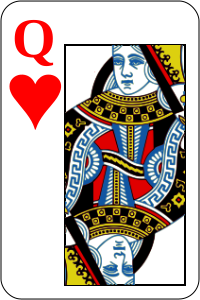
Strong Hands
These hands are profitable in most positions, especially from middle and late position. They need a bit more care from early position where someone behind you might hold a premium.
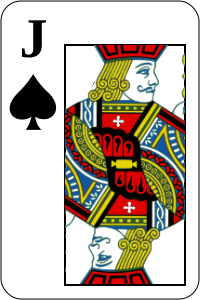
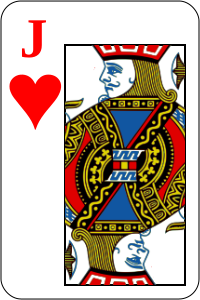
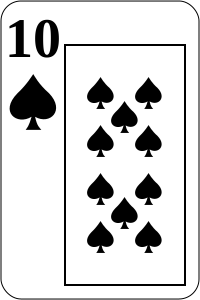
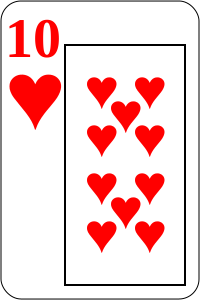
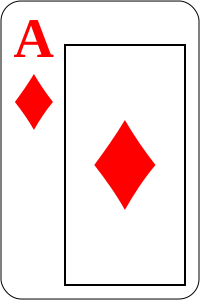
Speculative Hands
Suited connectors, small pairs, and suited aces fall into this group. They rarely win unimproved, but when they hit the board, they can make very strong hands like flushes, straights, and sets that are hard for opponents to see coming.
Position Changes Everything
The number of hands you should play shifts dramatically based on your seat at the table. From early position, you might play only 12 to 15% of hands. From the button, you can profitably open 40% or more.
A Practical Starting Hand Chart
The following chart gives you a solid baseline for a 9-player table. The key is "s" for suited and "o" for offsuit. Hands listed in green are opens from any position. Yellow hands open from middle position onward. Red hands are only profitable from late position.
| Position | Pairs | Suited | Offsuit |
|---|---|---|---|
| Early (UTG) | AA, KK, QQ, JJ, TT | AKs, AQs, AJs | AKo |
| Middle (LJ/HJ) | + 99, 88 | + ATs, KQs, KJs, QJs | + AQo |
| Late (CO) | + 77, 66 | + A9s-A2s, KTs, QTs, JTs, T9s | + AJo, KQo |
| Button | + 55, 44, 33, 22 | + 98s, 87s, 76s, 65s, K9s | + ATo, KJo, QJo |
The Danger of "Fancy" Hands
Beginners tend to overvalue hands that look pretty but play poorly. King-Jack offsuit feels strong, but from under the gun it is a losing hand in the long run. It gets dominated by AK, AJ, KK, KQ, and JJ. When you flop top pair with KJo, you often lose a big pot to a hand that has you outkicked.
Raise or Fold: Eliminate Limping
One of the fastest improvements you can make is to stop "limping" into pots. Limping means just calling the big blind instead of raising. When you limp, you give the players behind you a cheap price to see a flop, and you play the rest of the hand without initiative.
The simple rule: if a hand is good enough to play, it is good enough to raise. If it is not worth a raise, fold it.
How to Put This Into Practice
Memorizing a chart is one thing. Executing it under pressure is another. The best way to burn these ranges into your memory is repetition. On EasyPokerPlay, you can set up custom practice sessions where specific positions and stack depths are repeated, letting you build the discipline of folding marginal hands without the emotional cost of a real game.
Wrapping Up
Preflop hand selection is the gatekeeper of your entire strategy. Play too loose, and you bleed chips in spots you should never be in. Play too tight, and you become predictable. The chart above gives you a balanced starting point. Master it, and then learn to adjust it based on your opponents.