
There is a simple truth in poker that many players forget: you make most of your money from value bets, not bluffs. Getting called by worse hands is the engine that drives your win rate. If you are not extracting the maximum when you have the goods, you are leaving chips on the table every single session.
Value betting sounds straightforward. You have a good hand, you bet, and you hope they call. But the reality is far more nuanced. The best players squeeze extra bets from spots that average players check. This article will teach you how to think about value betting in a way that instantly improves your bottom line.
What is a Value Bet?
Notice the key phrase: "likely calling range." You do not need to have the absolute best hand. You just need to think about which hands your opponent will call with, and then determine whether most of those hands are worse than yours.
Thick Value vs Thin Value
Not all value bets carry the same level of risk. We separate them into two categories.
Thick Value
When you have a very strong hand and your opponent clearly has something decent, you are betting for thick value. These bets are low risk because you are far ahead of the hands that will call you.
You have pocket Aces on a board with one Ace. Any opponent holding an Ace with a worse kicker, a pocket pair, or even a stubborn two pair is calling your bet. This is thick value. Bet confidently.
Thin Value
This is where the money separates good players from great ones. Thin value bets are made with hands that are only slightly ahead of your opponent's calling range. The margin is razor-thin, but the accumulated profit over thousands of hands is enormous.
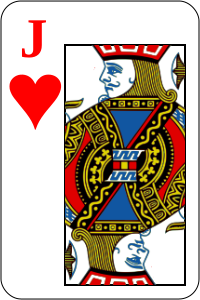
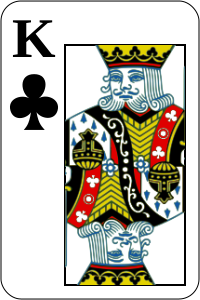
You have top pair with a Jack kicker. Is your opponent calling with K-T, K-9, or even Queen-high? Probably yes at lower stakes. Is there a chance they have K-Q or a set? Sure. But if more than half of their calling range is worse than your hand, betting is correct.
How to Size Your Value Bets
Sizing is about maximizing how much your opponent puts into the pot while keeping them calling. Bet too big, and they fold everything except the hands that beat you. Bet too small, and you leave money behind.
| Situation | Suggested Sizing | Reasoning |
|---|---|---|
| Very strong hand, opponent is sticky | 75-100% pot | They are calling a lot, charge them more |
| Strong hand, average opponent | 50-66% pot | Good balance of value and call frequency |
| Thin value, opponent may fold | 33-50% pot | Small bet still extracts, avoids losing big to better hands |
Common Value Betting Mistakes
1. Checking the River "To Be Safe"
This is the most expensive mistake in poker. Players hit top pair, bet the flop, bet the turn, and then check the river because "what if they have a flush?" If you were good enough to bet two streets, you are almost always good enough to bet a third. River checks with strong hands cost you a full bet of value every time they would have called.
2. Betting the Same Size Every Time
If you always bet two-thirds pot regardless of the situation, you are predictable and leaving money on the table. Against a loose caller, go bigger. Against a tight player who is on the fence, go smaller to keep them in.
3. Only Value Betting the Nuts
If you wait for the absolute best hand before betting for value, you are value betting maybe once every hundred hands. Top pair is a value bet. Second pair can be a value bet against the right opponent. Expand your value range and watch your win rate climb.
Reading the Situation
The best value bettors constantly ask themselves one question: "What worse hand calls me here?" If you can name at least two or three specific hands your opponent might hold that are worse than yours and that would likely call, you have a bet.
If you struggle to name even one worse hand that calls, you are probably not value betting. You might be turning your hand into a bluff, which is a completely different play.
Wrapping Up
Value betting is where your profit comes from. Bluffs keep you unpredictable, but value bets pay the bills. Focus on betting when you are ahead, sizing to keep opponents calling, and never checking out of fear when the math says bet. The players who extract one extra bet per session end up as the biggest winners at the table over time.