Bluffing is the most romanticized part of poker. Movies show players staring each other down, pushing mountains of chips into the middle on nothing but nerve. In reality, a good bluff is far less dramatic and far more calculated. It is rooted in math, board reading, and understanding what your opponent thinks you have.
If you want to graduate from a player who only bets with strong hands to someone who can win pots they "shouldn't," you need to understand why bluffs work, when they work, and how to size them so your opponent faces the worst possible decision.
What is a Bluff?
That definition has an important word: fold. A bluff only works if the other player gives up their hand. If they call, you lose. This means the first question you should always ask before bluffing is: "Will this opponent fold here?"
The Two Types of Bluffs
Pure Bluff (Stone Cold Bluff)
You have nothing. No pair, no draw, no chance of improving. The only way you can win the pot is by making your opponent fold. These are high-risk plays and should be used sparingly.
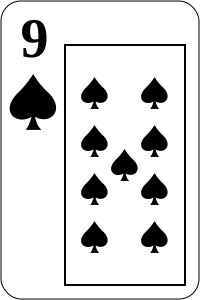
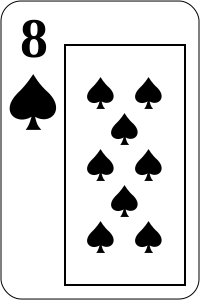
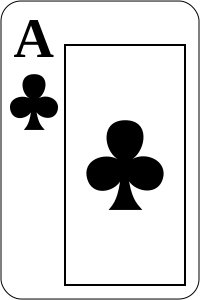
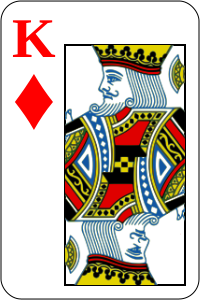
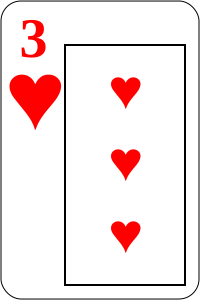
You completely missed this flop. But if you raised preflop and your opponent just called, a bet here tells the story that you have a big Ace or a strong pocket pair. Many opponents will fold hands like Q-J, T-9, or weak pocket pairs.
Semi-Bluff
This is the safer and more profitable type of bluff. A semi-bluff is a bet with a hand that currently is not the best, but has a real chance to improve on the turn or river.
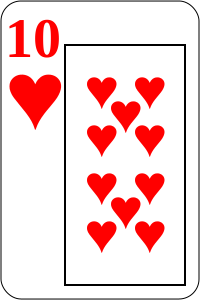
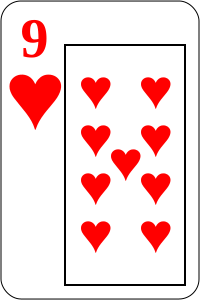
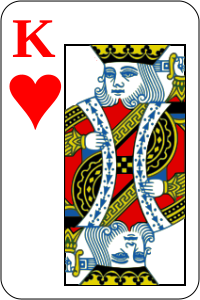
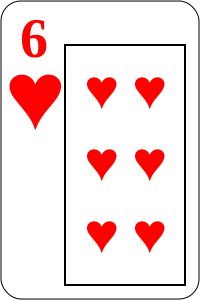
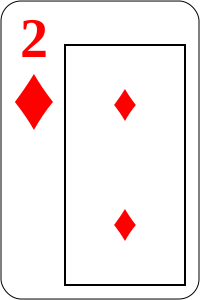
Right now you have nothing but a flush draw. But if you bet and your opponent folds, you win immediately. If they call, you still have roughly a 35% chance to make your flush by the river. This is the magic of the semi-bluff: you profit both when they fold and when you hit.
The Three Ingredients of a Good Bluff
1. A Believable Story
Your actions throughout the hand must tell a consistent story. If you checked behind on the flop and then suddenly bet huge on the river, your "story" does not add up. A good bluff follows a logical line that makes it look like you have a strong hand.
2. An Opponent Who Can Fold
This is the most overlooked ingredient. If you are playing against someone who calls every bet with any pair, bluffing is a terrible idea. Save your bluffs for opponents who think about the hand, respect your bets, and are capable of letting go of medium-strength hands.
3. Correct Sizing
If your bluff is too small, it gives your opponent a cheap price to see the next card or look you up. If it is too big, you are risking too many chips for the fold equity you gain. A good bluff size puts maximum pressure without overcommitting your stack.
Common Bluffing Spots
| Spot | Why It Works | Risk Level |
|---|---|---|
| C-bet on a dry flop | Opponent missed most of the time | Low |
| Scare card on the turn | A card that helps your perceived range (e.g., an Ace) | Medium |
| River after missed draw completes | If the board shows a completed flush or straight, you can represent it | Medium |
| Stealing the blinds preflop | Only 2-3 players left to act, most hands are folds | Low |
Recognizing When Others are Bluffing
Spotting bluffs is the other side of this coin. The same logic applies in reverse. Ask yourself: does their story make sense? Here are some red flags.
- Sudden aggression on a blank card. If the river changes nothing and your opponent suddenly bombs the pot, they may be representing a hand they do not have.
- Overbetting into a small pot. A player who has been passive all hand and suddenly bets twice the pot is often trying to buy the hand rather than extract value.
- Inconsistent line. They checked the flop on a wet board (where a strong hand would bet), then fired big on a dry turn. The story does not flow.
The Bluff-to-Value Ratio
Strong players maintain a healthy balance between bluffs and value bets. If you only bet when you have a monster, your opponents will fold every time you bet big. If you only bluff, they will call you down relentlessly.
A good starting point is roughly two value bets for every one bluff. This ratio keeps opponents guessing and makes both your bluffs and your value bets more effective.
Wrapping Up
Bluffing is not about bravery. It is about logic. Every bluff should have a clear reason: the story is believable, the opponent can fold, and the sizing applies the right pressure. Start with semi-bluffs where you have a safety net, and work your way up to pure bluffs as your reads improve. To build this skill in a low-pressure environment, practice against bots on EasyPokerPlay where you can review every hand and spot whether your bluffing line was sound.